

Paronychia is a purulent inflammation of the lateral nail folds (most often the proximal fold) due to the entry of a bacterial or fungal infectious agent.
Characteristic symptoms of paronychia include:
- Noticeable swelling of the lateral nail folds of the fingers;
- Persistent aching pain in the fingers, especially when touching the inflamed areas;
- Redness of the skin around the nail plate;
- Change in nail color to yellow-red;
- Redness (hyperemia) of the skin near the nail plate;
- Pus discharge from under the nail plate;
- Painful sensations when pressing on the nail plate;
- Impaired finger function;
- Local or general hyperthermia.
If such symptoms occur, immediate consultation with a healthcare professional is necessary.
Diagnosis:
- The diagnosis of this disease begins with collecting anamnesis (clarifying the timing and mechanism of nail plate or fold trauma);
- Visual examination of the finger;
- It is recommended to perform an ultrasound examination of the soft tissues;
- X-ray in two projections.
Treatment:
- Conservative treatment – includes baths with a 10% NaCl solution, taking nonsteroidal anti-inflammatory drugs, and antibiotic therapy. If this therapy is ineffective, surgical treatment is indicated.
- Surgical treatment is performed under local anesthesia. The classical approach involves removing the nail plate, but with technological advancements and the development of the podiatry specialty, efforts are made to preserve the nail plate as much as possible. Therefore, only the affected part of the nail plate is removed.
Clinical Case: A female patient, L., engaged in decorative crafts, constantly works with flowers (roses), hot glue guns, and other factors that cause nail plate injuries. She frequently experiences nail trauma—sometimes pricking her finger with a rose thorn, sometimes suffering burns from working with a hot glue gun. This time, she did not notice when she pricked her finger in the hyponychium area on the distal fold and, in addition, suffered a burn from hot glue. She did not treat the affected areas with antiseptics, did not apply dressings, and continued working as usual. After four days, she began experiencing throbbing pain in the matrix area of the first finger of her hand. At home, she started taking baths with a 10% NaCl solution. Her condition did not improve, and the pain intensity increased, leading her to seek medical help.


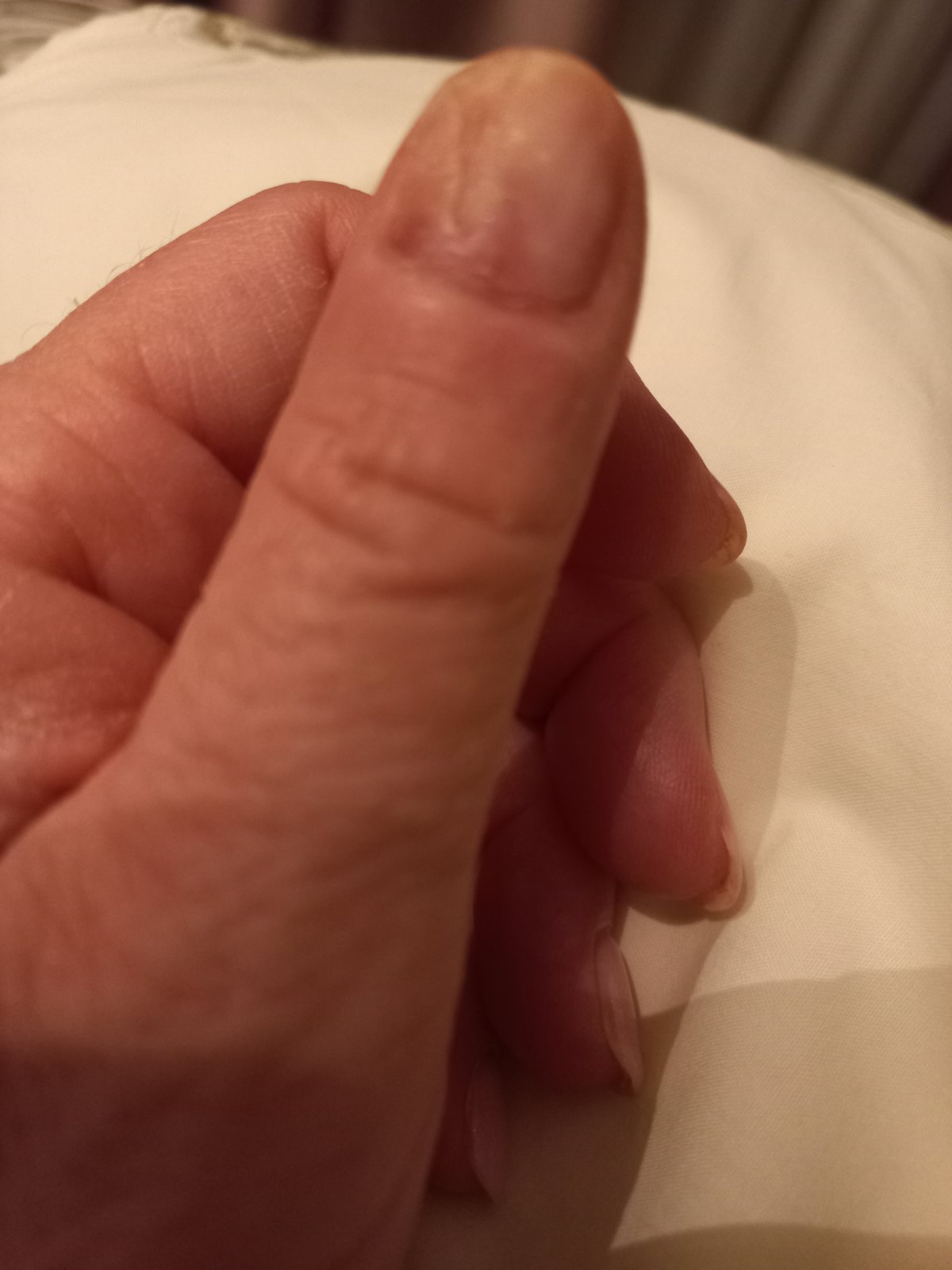
Upon examination (Figures 1 and 2), hyperemia was noted in the proximal fold area, with sharp pain in the distal fold, where pus discharge from the hyponychium area was observed. The nail plate was detached from the nail bed, mobile, and painful upon palpation. The spread of pus from the hyponychium area to the matrix zone was evident.


A decision was made to perform sanitation and abscess drainage without removing the nail plate (Figure 3). Along the wound channel, the detached nail plate was removed up to the matrix area, with approximately 3.0 ml of pus observed (Figure 4). The abscess area was treated with broad-spectrum antiseptics, and a sterile dressing was applied. Recommendations were given for home care: treating the wound twice daily with broad-spectrum antiseptics, using an aseptic dressing, soaking in a 10% NaCl solution at a temperature of up to 40°C for 15 minutes daily before dressing changes, and taking photographic records. After five days (Figure 5), inflammation subsided, and the nail bed and nail plate began to recover.
Conclusions:
- Conservative treatment methods are effective in the early stages of the disease;
- The choice of treatment strategy remains with the attending specialist;
- Nail plate removal is not mandatory in cases of paronychia.

-100x100.png)